
2026-05-13 IDOPRESS
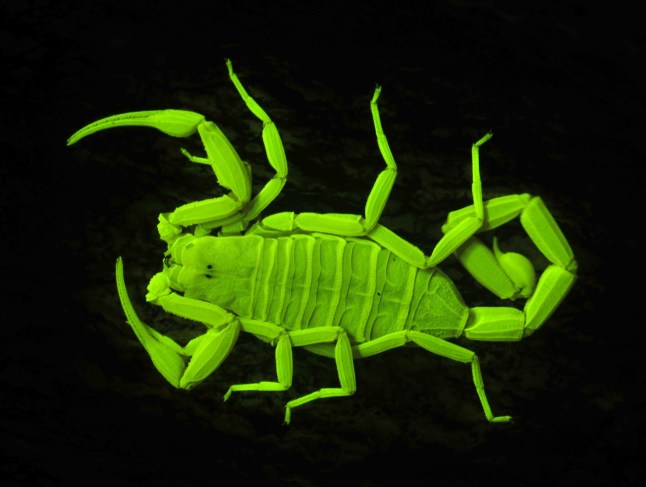
An Arizona bark scorpion,illuminated with UV light,in Tuscon,Arizona (Picture: Alan Rockefeller/Cover Media)
They’re a formidable hunter with a punchy sting. And if scorpions weren’t scary enough,scientists have discovered that they are actually mini cyborgs.
Most of the creature’s outer shell is made of chitin,a tough,sugar-based material that forms a protective exoskeleton.
However,researchers found that the claws and stinger are reinforced with metal,helping them grip and strike prey and adding another weapon to their arsenal.
Unlike some animals,adult scorpions can’t regrow damaged body parts,making this added toughness vital for survival.
In a study published on April 28 in the Journal of the Royal Society Interface,a team led by biologist Sam Campbell analysed 18 scorpion species from museum collections.
Using X-ray imaging,electron microscopy and ultra-fine lasers,they mapped the presence of metals such as zinc,manganese and iron across the animals’ bodies.

The team used x-ray imaging to identify different metals in the scorpion. Zinc is shown in red,manganese is shown in green,iron is shown in yellow,chlorine is shown in blue and calcium is shown in purple (Picture: Sam I. D. Campbell,et al/Cover Media)
‘Scorpion weapons consist of the stinger (telson) and claws (chelae) and contain diverse metals such as zinc,manganese and iron,though little is known about comparative patterns of incorporation across the wider clade,’ the team writes.
The findings revealed that metals are not spread evenly. Instead,they are concentrated in key areas: the tooth-like edges of the claws and the sharp tip of the stinger.
Iron was found only in the claws,while manganese appeared exclusively in the stinger. Zinc was present in both,but unevenly.
‘In this study,we harness X-ray-driven microanalytical techniques to characterise the different elemental enrichment patterns within the weapons of 18 species from a range of scorpion families,’ the researchers add.
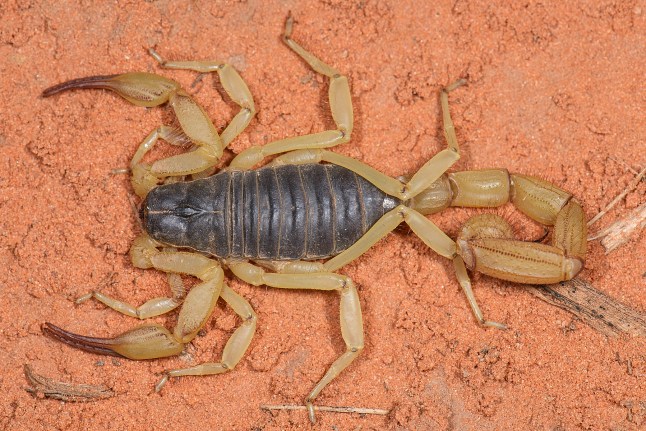
A black hairy scorpion. Unlike many animals,they are unable to regrow damaged body parts,making metal reinforcement in their claws and sting key to survival(Picture: Marshal Hedin/Cover Media)
Scorpions even rely on different hunting strategies according to the metal they have incorporated into their bodies. Some primarily use their stinger to subdue prey,while others depend more on their pincers.
In many stingers,zinc was concentrated at the very tip,with manganese layered beneath it.
 Follow us to receive the latest news updates from Metro (Picture: Getty Images)Metro’s on Whatsapp! Join our community for breaking news and juicy stories.Researchers likened the structure to a ‘layered popsicle’. In contrast,metals in the claws appeared more blended.The team also discovered that smaller,weaker pincers often contained higher levels of zinc and iron than larger ones,suggesting that metals may help compensate for reduced size by increasing durability.Scorpions are not unique in using metals in their bodies. Other arthropods,including ants,wasps and centipedes,also incorporate metals into their structures.But scorpions appear to be an extreme case in terms of using metal as a survival strategy.Experts say the findings offer new insight into how scorpions – which have existed for around 450 million years – have survived for so long.
Gaming Without Borders, Meet in Zhejiang! Zhejiang Digital Culture Delegation Makes a Splash at Gamescom in Germany
On Chain Aurora (OCA) Lists on Hotcoin, Exploring PoC and Deflationary Mechanisms
Games as a Bridge to the World: Zhejiang's Charm Sets Sail for Cologne—The 2026 Zhejiang Trade in Services (Cologne) International Game Expo Successfully Held
New video shows terrifying scramble for lifejackets before ferry capsizes
Nepal head teacher’s quick thinking saved more than 1,600 children from floods
Man killed after lethal storm sinks two yachts in Cyprus
©copyright2009-2020Fresh life
